
Coffee shop staff schedule for openers and closers

How to build a coffee shop staff schedule that covers the rush without overstaffing the lull: opener, mid and closer shifts, rush headcount and barista hours.

Jonan Junwikul in a light linen blazer over a black T-shirt, on a city street

Jonan Junwikul

Author ·

Reviewed by Jamie Rosenberg

Product, Kronto

A café server holding a tablet beside a guest working on a laptop.
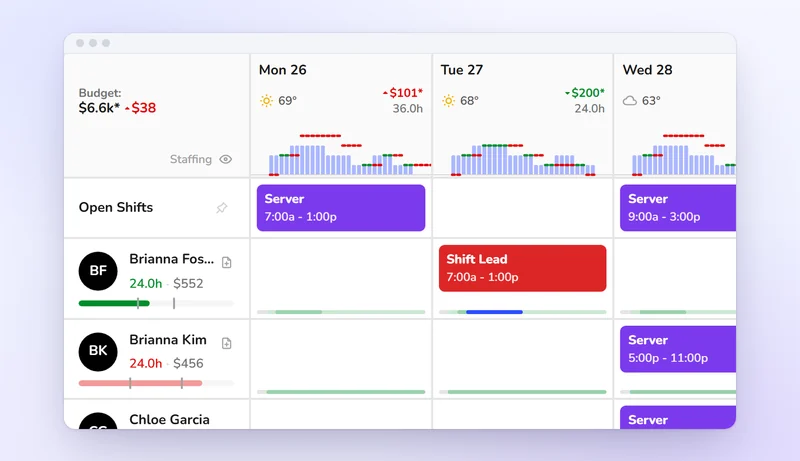
The top of a Kronto schedule: the week's labor budget and how much each day is over or under it.

In this guide

Sample coffee shop staff schedule

One day, five shifts, from the 5:30 a.m. open to the 6:30 p.m. clean-down. It's in the guide below.

What shifts does a coffee shop need in a day?

Three core shifts cover most cafes. The opener arrives 30 to 60 minutes before the doors open to set up the bar. The mid covers lunch, breaks and the afternoon. The closer takes the afternoon and the clean-down. On busy mornings, add a short rush shift rather than stretching everyone's day.

Key takeaways

  1. Three core shifts carry most cafes: an opener who comes in 30 to 60 minutes before the doors, a mid and a closer.
  2. Staff the morning peak with three, or four if you serve food. Two can hold the rest of the day.
  3. A shop open 6 a.m. to 6 p.m. runs on about eight baristas, plus one or two for occasional shifts.
  4. Closers don't open the next morning.
  5. Every day gets a named backup opener who has the keys and the alarm code.
  6. 14- and 15-year-olds can't start before 7 a.m. under federal rules, which keeps them off most opens.
  7. Post the schedule a week out at the least, and two weeks if you can.

How many baristas do you need for the morning rush?

Three at the peak, or four if you also serve food: one on register, one or two on bar, and one floating to restock, bus and run food. Two can cover the hours outside the rush. Count stations, not heads, and pull your POS sales by half hour to see when the line builds and when it fades.

How many employees does a small coffee shop need?

About eight baristas, for a shop open 6 a.m. to 6 p.m. with three on the morning rush and two the rest of the day. That pattern comes to roughly 196 staff hours a week. At about 25 hours per barista, that's eight people, plus one or two who take occasional shifts.

The math: two people from 6 to 7 a.m., three from 7 to 10, and two from 10 to 6 is 27 staff hours a day. Add an hour of setup and clean-down and it is 28 a day, or 196 over seven days. Change the counts to match your own sales by half hour.

Why 25 hours: employees in food services and drinking places averaged 25.4 hours a week in August 2026⁠[1]. The backups cover vacations and call-outs without pushing anyone into overtime.

That's a real payroll, every week. A coffee shop budget template sets it against the sales you expect, day part by day part.

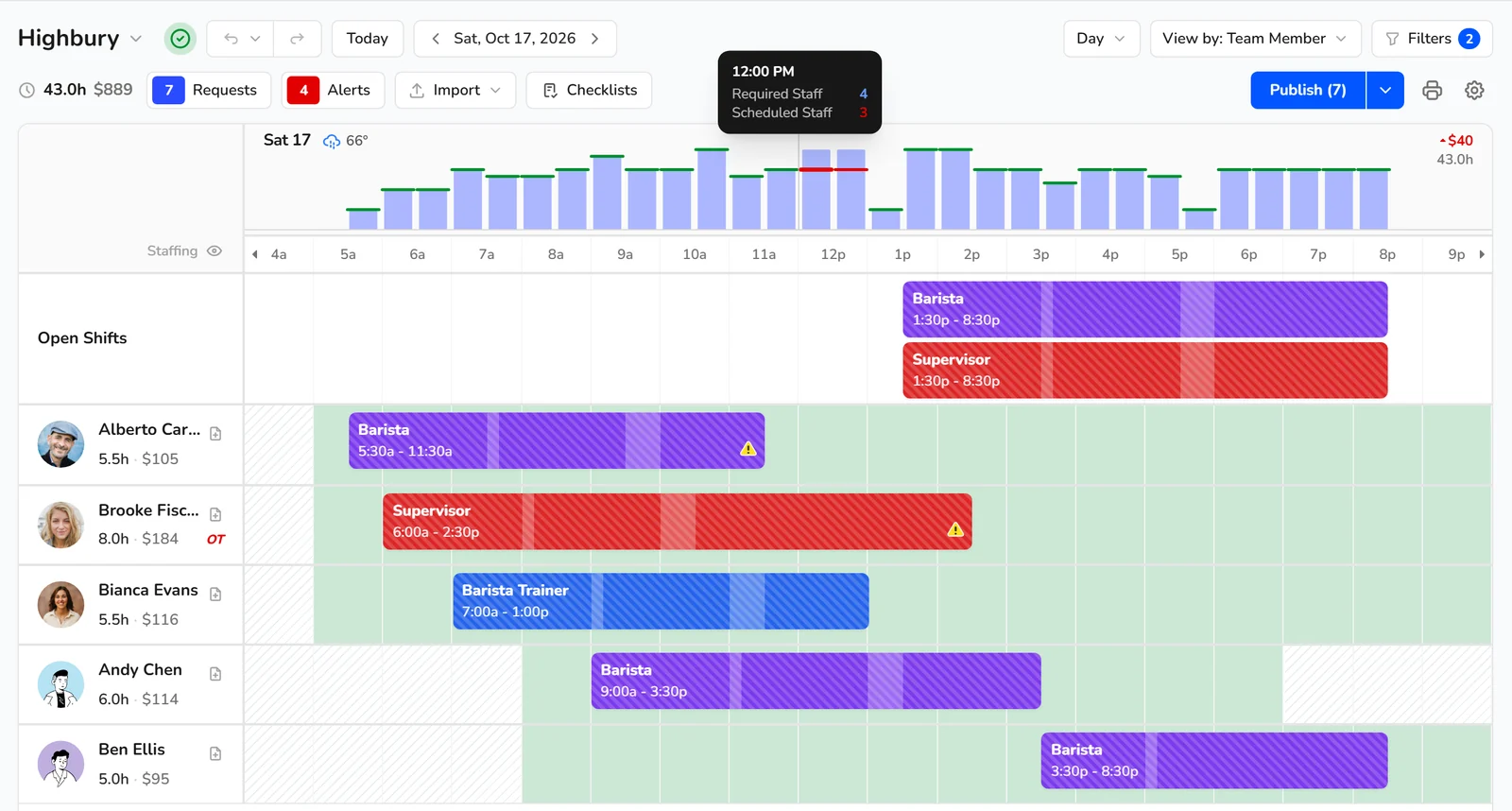
Kronto day view comparing required staff from the sales forecast with scheduled staff for each half hour, above the day's shifts

How many hours a week do baristas work?

Many baristas work part-time. Employees at food services and drinking places averaged 25.4 hours a week in August 2026, and the BLS notes part-time work is common for food and beverage serving workers. Ask each barista how many hours they want and build toward that number, not a full-time default.

Average weekly hours come from BLS industry data⁠[1]. Part-time work and early, late, weekend and holiday shifts come from the BLS Occupational Outlook Handbook⁠[2].

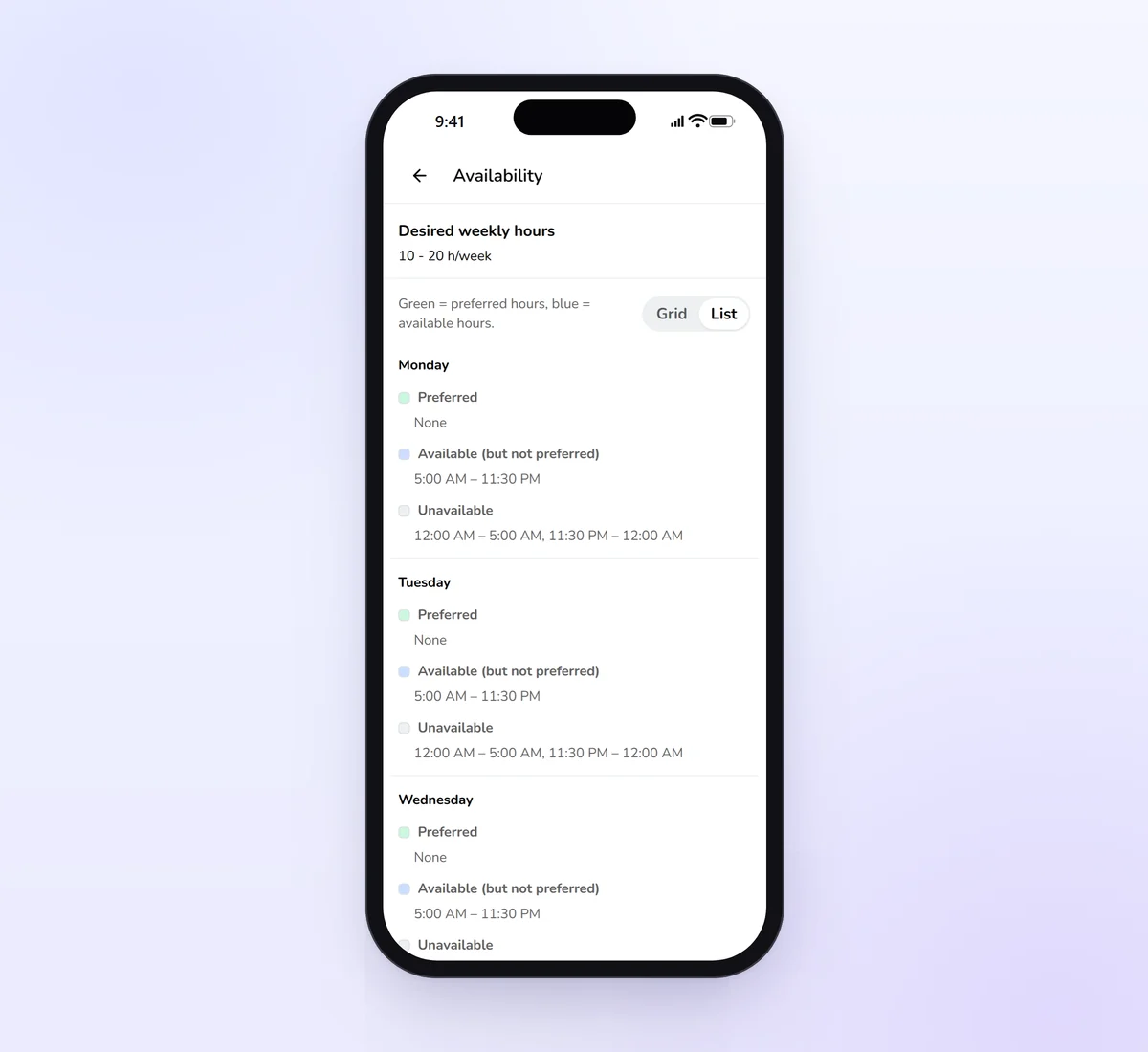
Kronto mobile app Availability screen showing a barista's desired weekly hours and her preferred and unavailable hours for Monday and Tuesday

How do you cover an early open when the opener calls out?

Name a backup opener for every day on the posted schedule, and make sure that person has keys and the alarm code. When the opener calls out, the backup is your first call. Run the swap through your scheduling app with a manager approving it. Then the hours and the pay follow whoever actually opened.

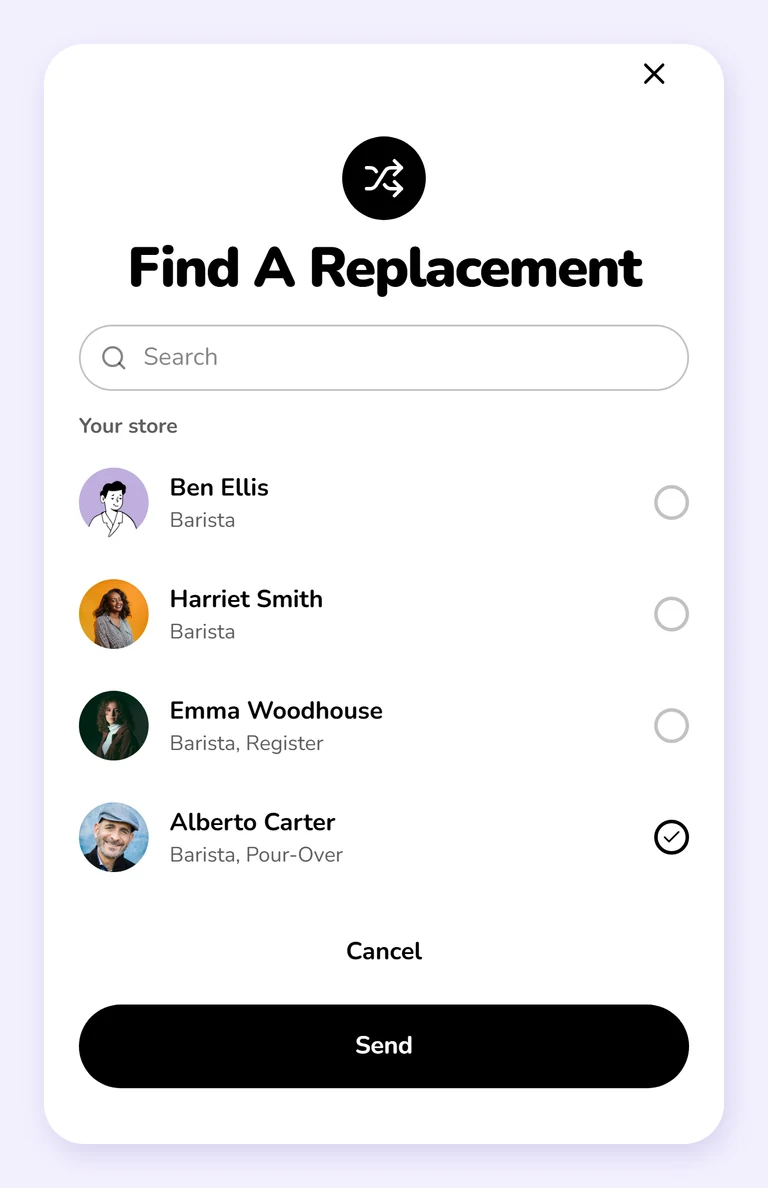
In a shift swap app for coffee shops, the opener can offer the whole shift, or just the rush half, to teammates who can cover. The schedule changes only after a manager approves.

Kronto mobile app Find A Replacement sheet for a barista's Wednesday shift, listing eligible teammates at her store with one selected and a Send button

Can teenagers work coffee shop shifts?

Yes, within limits. Under federal rules, 14- and 15-year-olds may work only between 7 a.m. and 7 p.m., or 9 p.m. from June 1 to Labor Day, up to 3 hours on a school day and 18 hours in a school week. That rules them out of most openers. States may add stricter limits.

Source: U.S. Department of Labor child labor rules for nonagricultural jobs⁠[3].

A sample day, from the 5:30 a.m. open to clean-down

This one is for a cafe open 6 a.m. to 6 p.m. that's busiest from 7 to 10 a.m. Swap in your own sales by half hour.

Example coffee shop day (open 6 a.m. to 6 p.m.)
ShiftHoursMain job
Opener5:30 a.m. to 1:30 p.m.Set up bar, dial in espresso, open doors
Second opener6 a.m. to noonRegister from the first customer
Rush support7 a.m. to 10 a.m.Second bar through the peak
Midnoon to 6 p.m.Lunch, restocking, afternoon service
Closer1:30 p.m. to 6:30 p.m.Afternoon service and clean-down

Nothing should depend on memory at 5:30 a.m.

  • Give the opener and the closer each their own checklist.
  • Keep a closer off the next morning's open. A 6:30 p.m. finish and a 5:30 a.m. start leaves eleven hours, and later closes leave less.
  • Overlap shifts through the rush. A break should never leave one person alone on bar at 8 a.m.

Habits that keep good baristas around

  • Post the schedule at least a week ahead.
  • Rotate the weekend opens. The newest hire shouldn't get every one.
  • Let baristas trade shifts with each other, with a manager approving each trade.
  • Track how many hours each barista wants, and stay close to it.

Kronto's coffee shop scheduling puts baristas on for the rush from your own POS sales, half hour by half hour, and flags clopenings before you publish.

Frequently asked questions

What is a barista opening shift?

The first shift of the day. It starts before the doors open, with time to turn on equipment, dial in espresso, stock the bar and count the till.

How long is a typical barista shift?

It depends on the cafe. Openers and closers often work longer shifts and rush support shorter ones. Your state's break rules may decide where a long shift gets split.

Should the owner work the schedule too?

In a small cafe, often yes. Put yourself on the schedule like anyone else. The team can see who's covering, and the labor cost reflects reality.

How far ahead should a coffee shop post the schedule?

At least a week ahead, and two weeks if you can. Baristas with classes or second jobs need time to plan around it. Some cities set a deadline: New York City requires fast food employers to give workers their schedules 14 days in advance⁠[4].

How do you schedule college students who work as baristas?

Collect availability again at the start of each term, because class schedules change every semester. Short rush shifts fit between morning classes. A schedule posted two weeks out lets students trade before exams instead of calling out.

Sources

  1. Industries at a Glance: Food Services and Drinking Places (NAICS 722), U.S. Bureau of Labor Statistics. Read November 10, 2026. ↩
  2. Occupational Outlook Handbook: Food and Beverage Serving and Related Workers, U.S. Bureau of Labor Statistics. Read October 23, 2026. ↩
  3. Fact Sheet #43: Child Labor Provisions of the Fair Labor Standards Act (FLSA) for Nonagricultural Occupations, U.S. Department of Labor, Wage and Hour Division. Read October 23, 2026. ↩
  4. Fair Workweek Law: Information for Fast Food Employers, NYC Department of Consumer and Worker Protection. Read October 23, 2026. ↩

Written from Kronto's work with cafe owners and managers. Hours and labor figures are from the BLS and the U.S. Department of Labor. Last reviewed November 5, 2026.

Reviewed by Jamie Rosenberg, Product, Kronto, on November 5, 2026.

From the 5:30 a.m. open to payday

Whoever covered the open gets paid for it, tips included. $5 + tax per user per month on Standard, billed monthly, no contract. Running payroll in Kronto takes Pro, in early access.

Free for up to 10 people