

What's in the coffee shop budget template
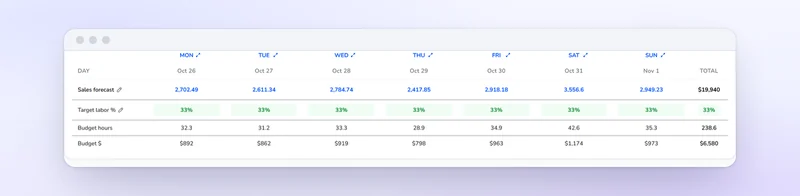
- Day-part labor. Sales and labor hours for each day part of each day, then total sales, labor budget, scheduled cost, labor %, over or under, and sales per labor hour by day part, plus the SPLH your target needs.
- Overtime check. Regular and overtime hours and pay for each person, at time and one-half over 40 hours in a workweek.[4]
- Monthly P&L. Food and cups, labor, rent, utilities, marketing and other costs as shares of sales, actuals at month end, prime cost and profit margin.
- Sources. Each benchmark default with its link and the date we checked it.
How to read the profit line
Compare your margin with published figures once every cost line is filled in. Square, citing the Specialty Coffee Association, says non-roaster coffee retailers can make as much as a 6.9% profit margin, and it quotes Sharpsheets, a seller of financial models, for a 13.7% average operating margin at U.S. coffee shops in 2024.[5] An operating margin comes before owner pay and loan payments, so compare like with like. For more published margins and why they disagree, see how much a coffee shop makes. If you're well below them, labor by day part is the first place to look.
Coffee shop budgeting mistakes to avoid
- Staffing the afternoon like the morning. Same headcount, a fraction of the sales.
- Forgetting the opener's prep time. The first hour before doors is paid labor with no sales against it. Budget it.
- Leaving payroll taxes out. Fill in the labor load cell or every labor percentage reads low.
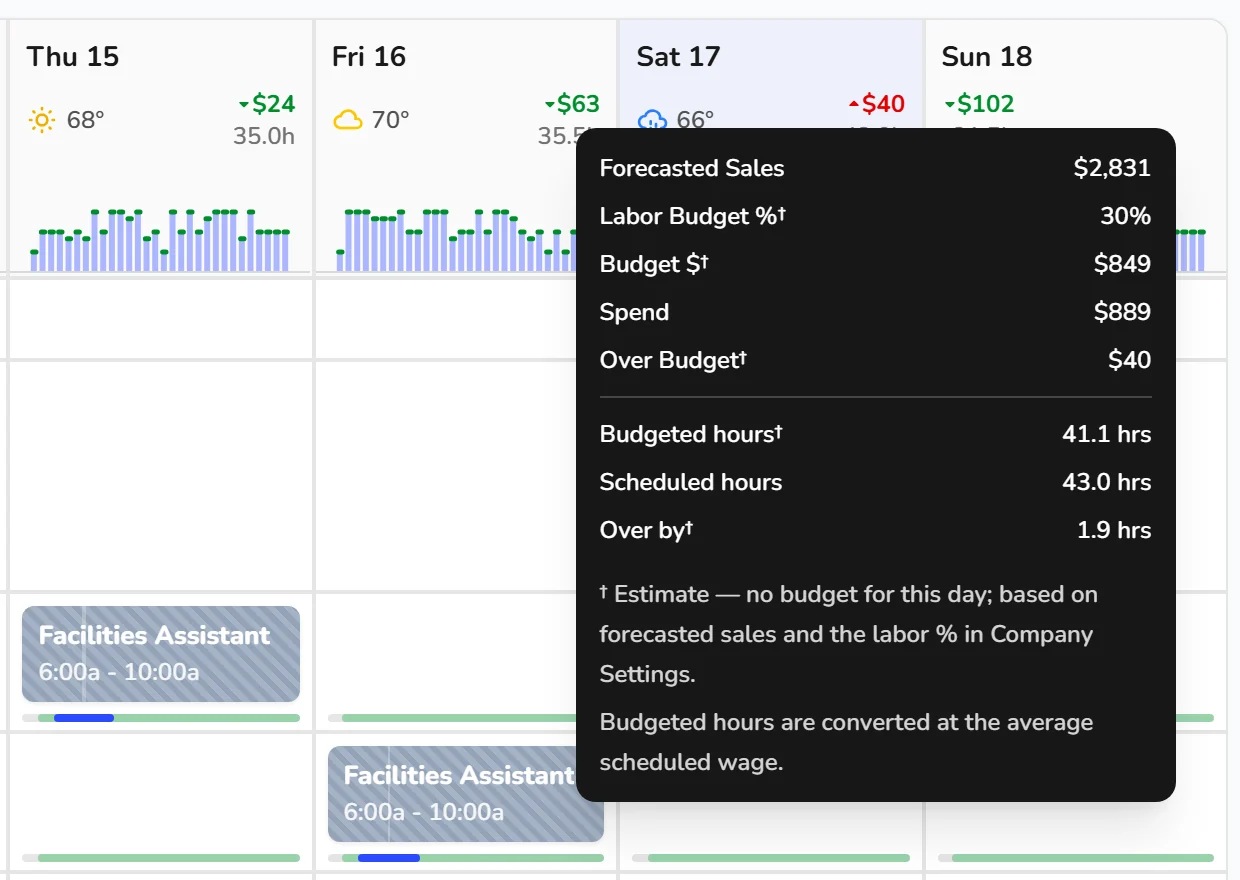
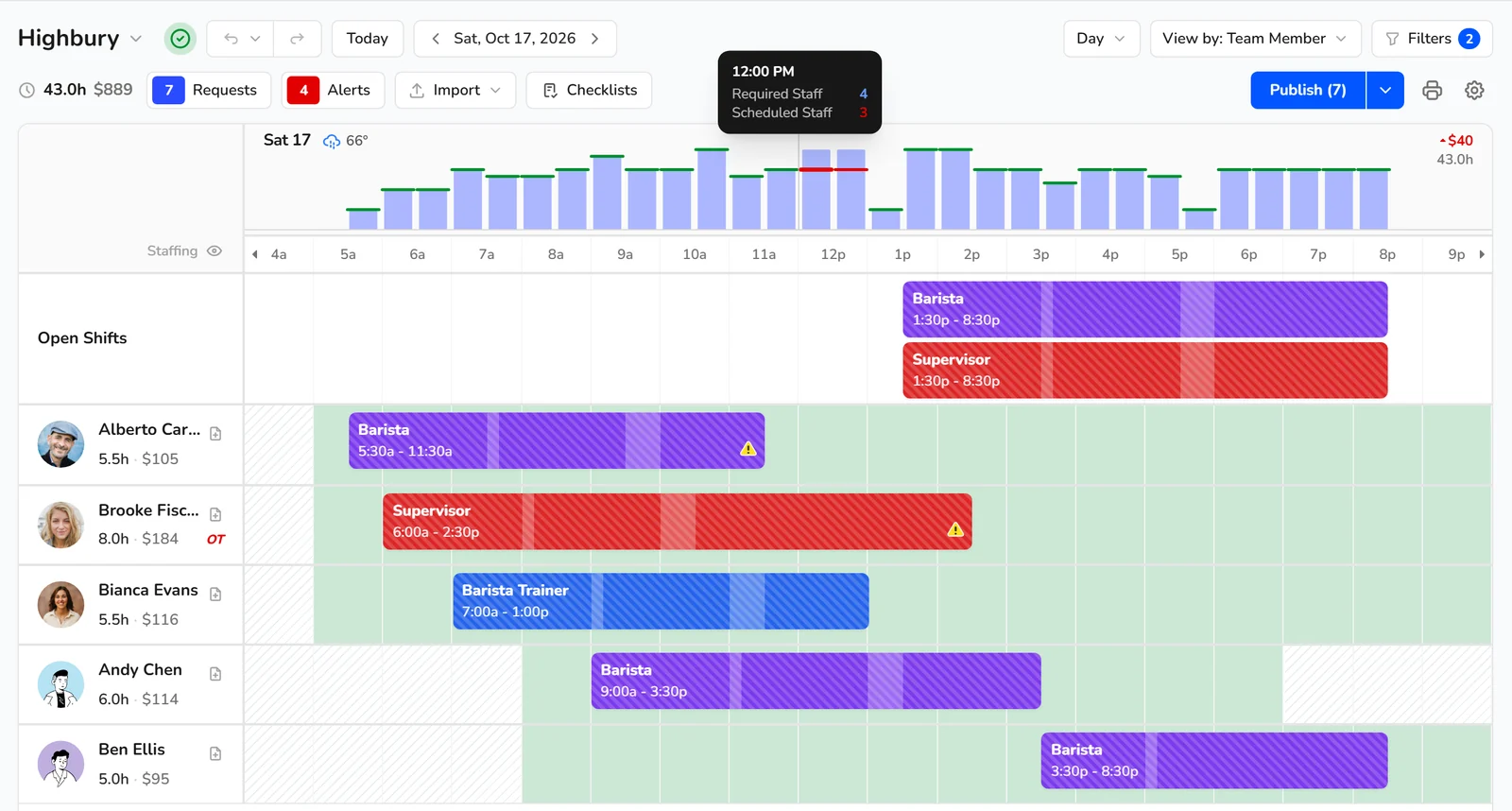
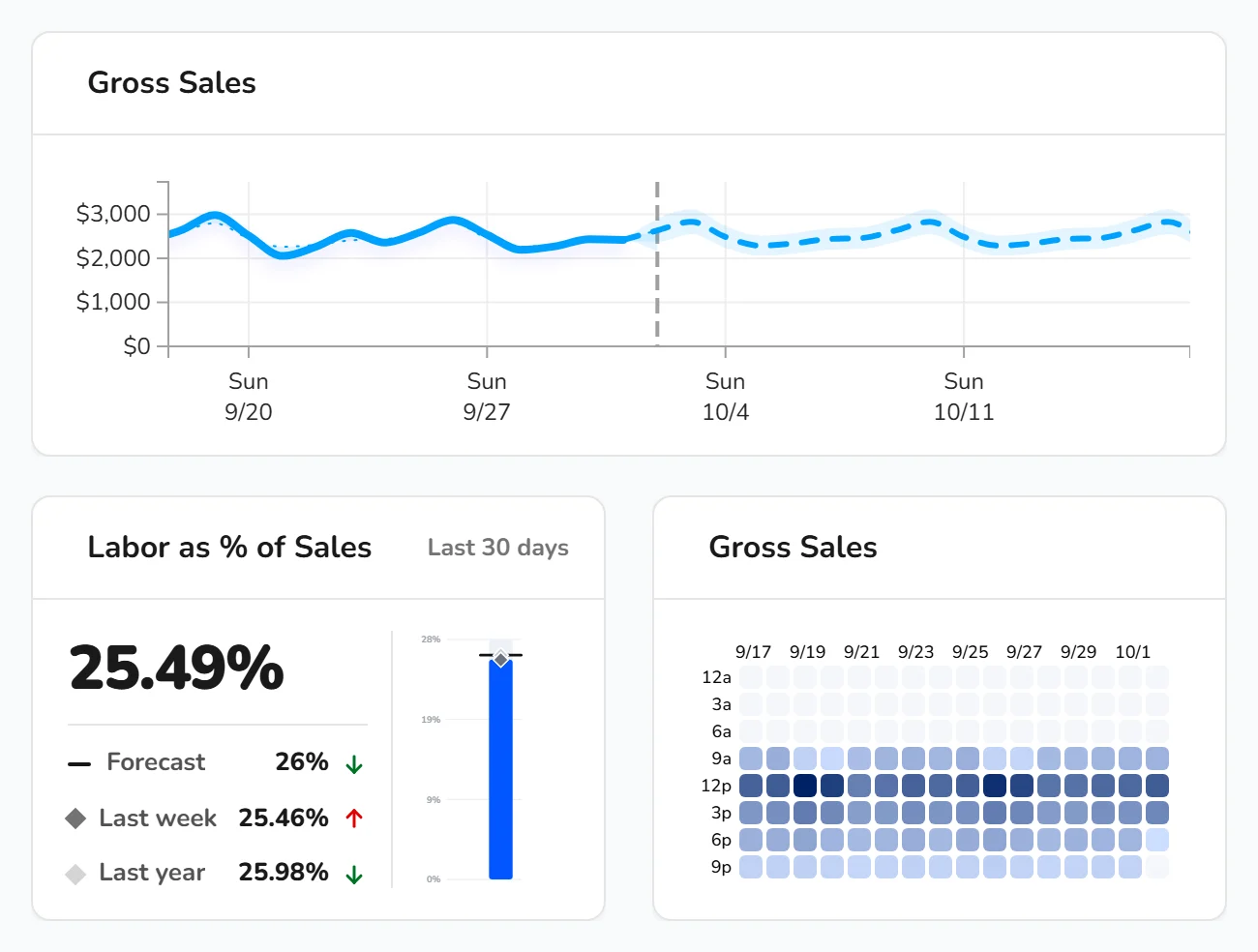
Kronto's labor budget shows each day's budget and over or under while you schedule the shop.
 Jim McKelvey
 Jamie Rosenberg