
A swap policy you can copy, built for the early open
This one fits a cafe with a small team and an early open. Adjust the times to your hours.
- Every swap is requested in our scheduling app. Texts between baristas don't count until the app shows the swap approved.
- Opening and closing shifts swap only between keyholders. Barista shifts swap barista to barista.
- Request a swap for an opening shift by 6 p.m. the day before, and at least 24 hours ahead for any other shift.
- Sick? Call the manager. Sick calls don't belong in the swap queue.
- You may offer the whole shift or only part of it, for example the first two hours of a long open.
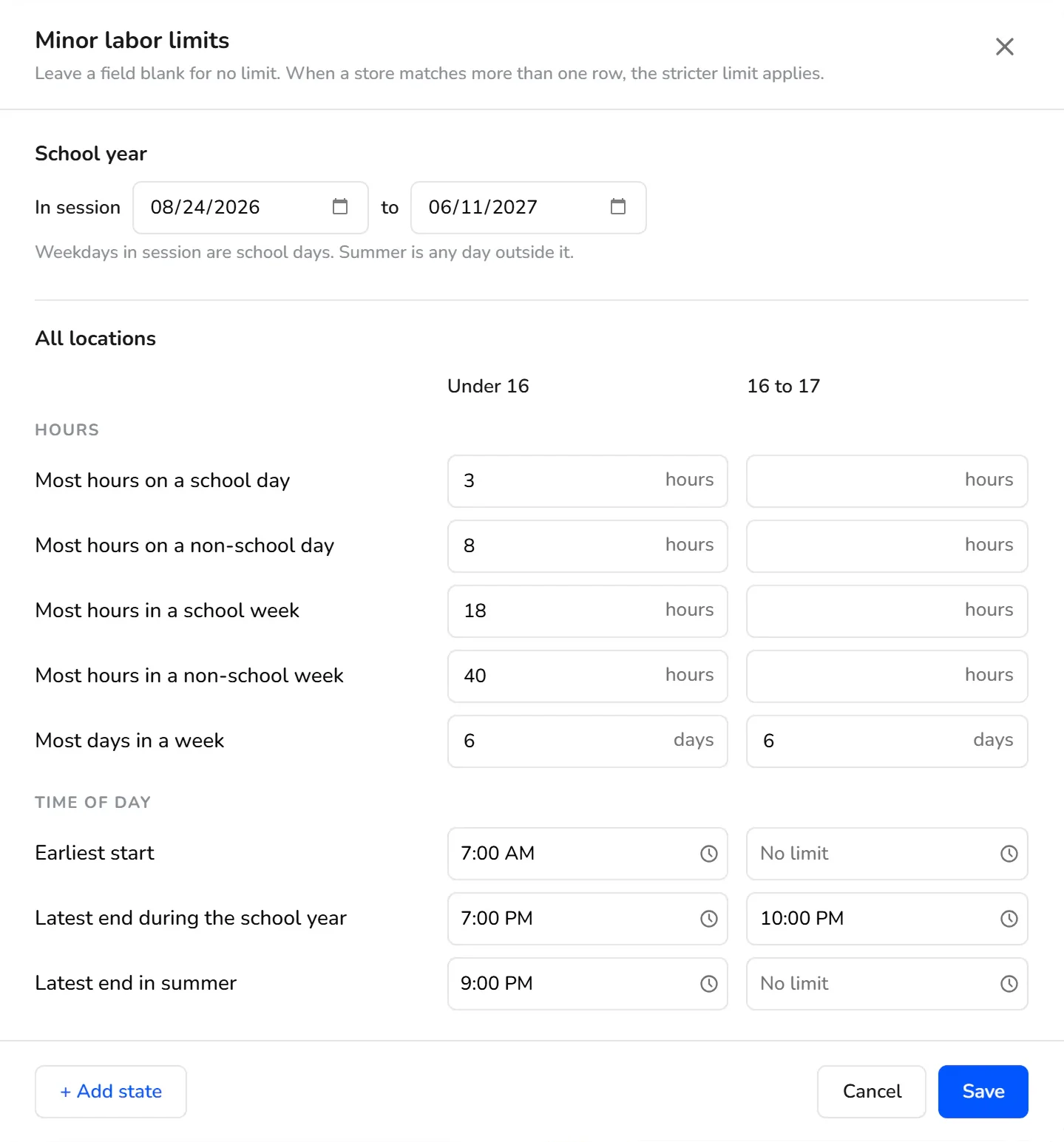
- The manager approves each swap, and can turn one down if it leaves the rush short-handed, creates overtime or breaks minor labor rules.
- No swap gets approved that leaves a barista fewer than 10 hours between a close and their next open. Where a local law covers you, follow its consent and premium rules.
- Until a swap is approved, the shift is yours. Once it's approved, it belongs to the teammate who took it.
An open is more than a shift
Rule 2 is the one most cafes skip and most regret. An open is the keys, the alarm, the cash drawer and the first batch brewed on time. Rule 3 exists because the morning rush is the stretch a coffee shop can least afford to run short, and the hardest to fix late. The Bureau of Labor Statistics notes that food and beverage serving shifts often include early mornings, late evenings, weekends and holidays, and that part-time work is common in these jobs[3]. That mix is exactly what produces last-minute swap requests.
Rule 7 is about clopenings. A barista who closes Friday and picks up Saturday's open through a swap adds those hours to that week. When both shifts fall in the same workweek, the hours count toward federal overtime: at least time and one-half for hours over 40 in a workweek[4]. No federal rule sets rest between shifts. Where a local law does, it asks for consent and a premium rather than banning the clopening, and it covers large chains only:
- In New York City, a fast food employer that is part of a chain with 30 or more locations nationally needs the worker's written consent, and pays a $100 premium, for a close and an open less than 11 hours apart[5].
- In Oregon, retail, hospitality and food service employers with 500 or more employees worldwide may schedule work within 10 hours of the last shift only if the worker asks for or agrees to it, and pay those hours at time and a half[6].
- Seattle requires time and a half for hours between a close and an open less than 10 hours apart, at retail and food service employers with 500 or more employees worldwide[7].
In New York City, a voluntary trade between two workers owes no schedule-change premium, but a swap a manager asks for does[5]. Check your local rules before you set the gap.
Kronto flags the overtime. You make the call.
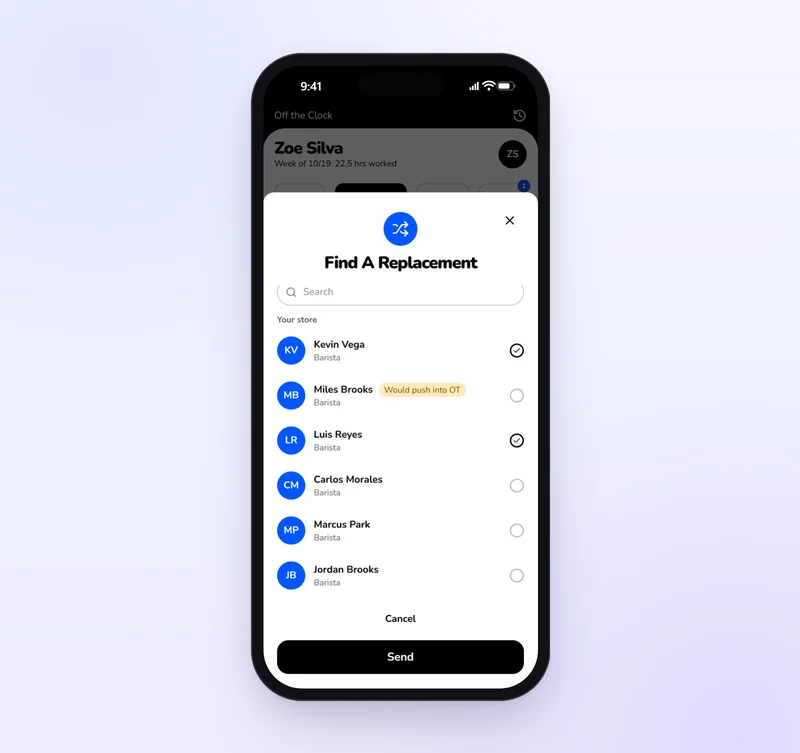
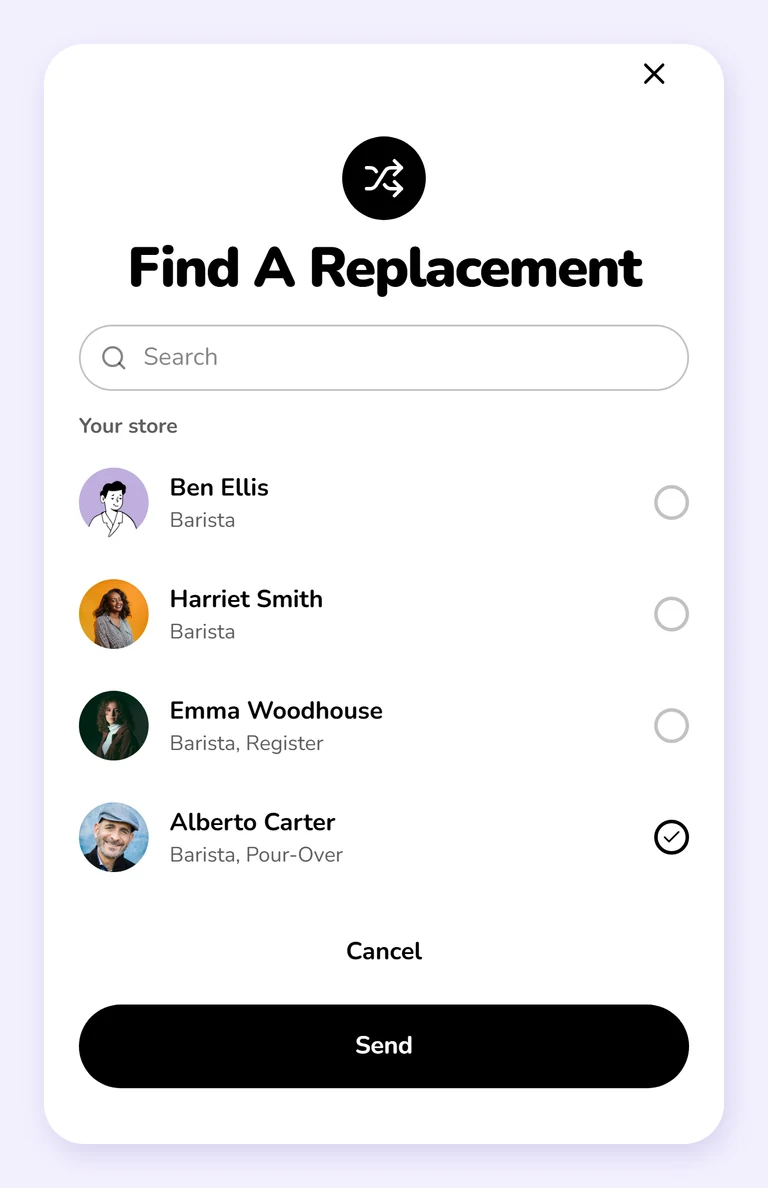
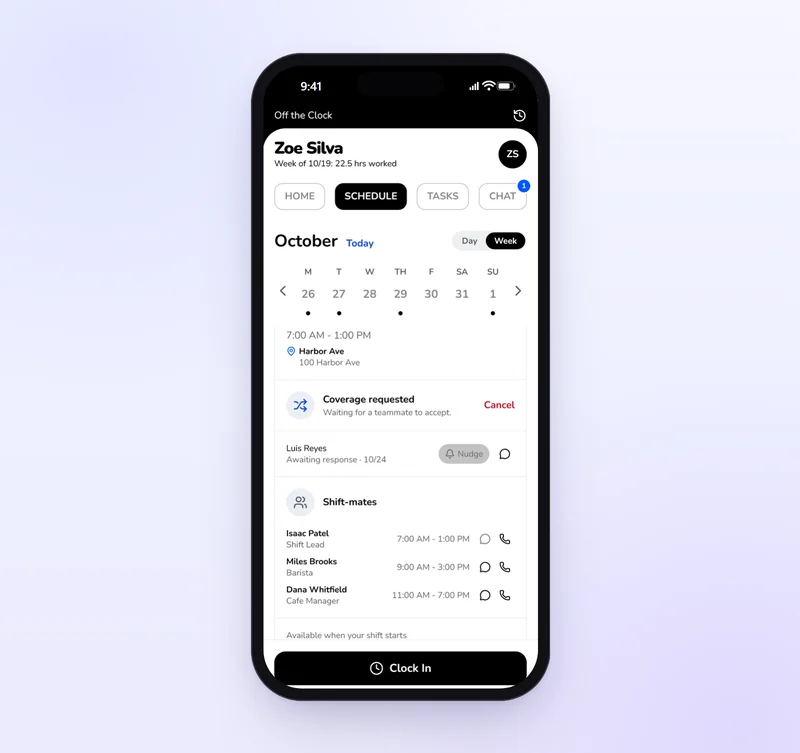
A barista taps Find coverage on a published shift. Kronto offers it to teammates who hold the shift's role, aren't scheduled for overlapping hours and aren't on approved or pending time off. That means this cafe, or sister cafes too if your company's swap scope allows.
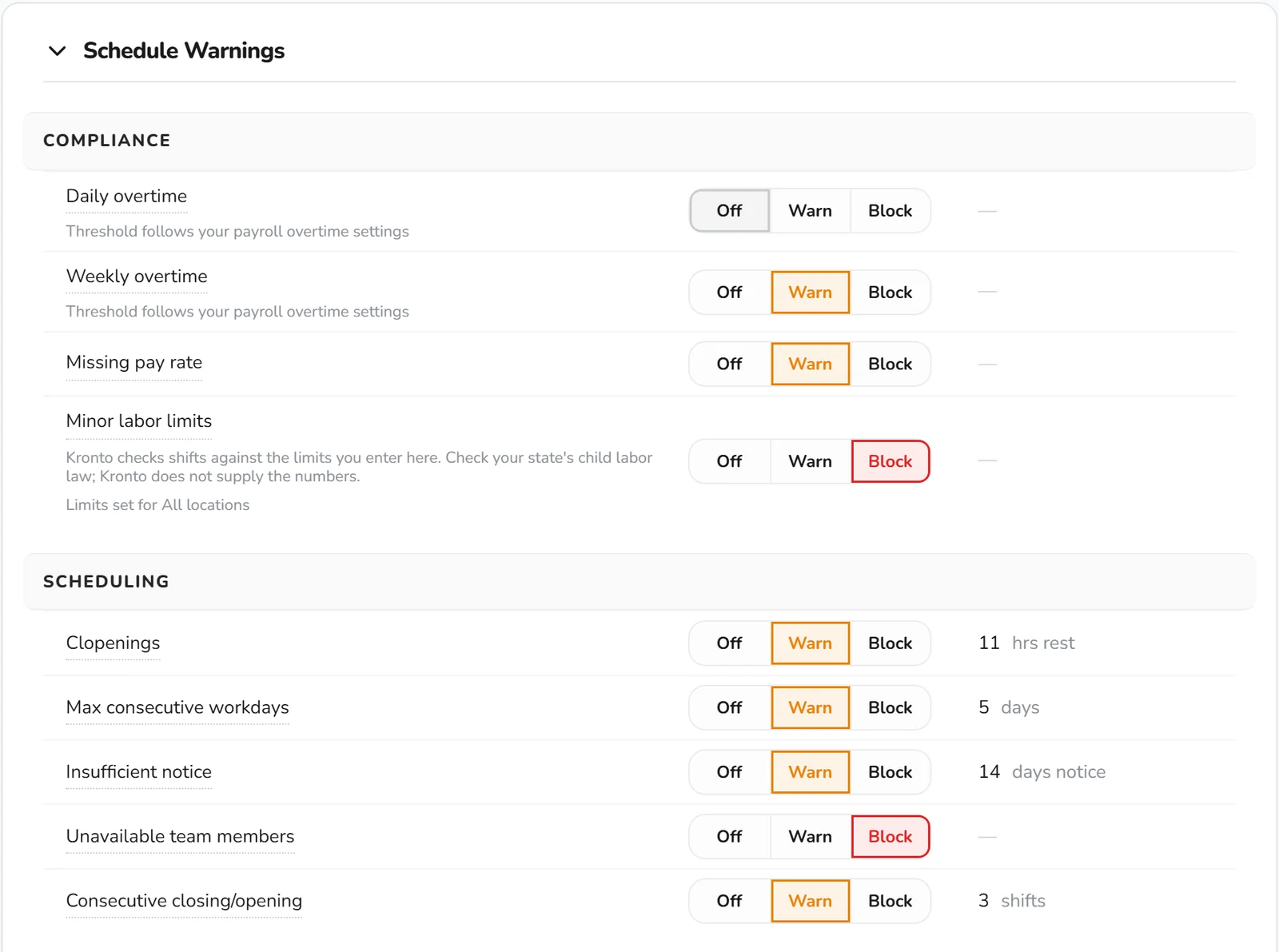
The barista and the manager both see each teammate's projected daily and weekly overtime. It's flagged, never blocked. With minor labor limits set to Block, Kronto leaves out anyone a swap would push past them, and never tells the barista asking why. A coworker's age stays private.
The shift swap app for coffee shops page walks through an open changing hands, from the barista's phone to the manager's approval.
Most swap trouble starts with the schedule. Put a keyholder on every open and close when you build the week with coffee shop scheduling in Kronto, and fewer opens need a swap at all.
 Jamie Rosenberg

 Michael Haft