
Bakery costing spreadsheet: item cost and labor

A free bakery costing spreadsheet that shows what each piece really costs: baker time, food cost percentage, a weekly bake and counter labor budget and a P&L.

Black-and-white photo of Jamie Rosenberg smiling on a New York rooftop

Jamie Rosenberg

Author ·

Reviewed by Jonan Junwikul

Growth, Kronto

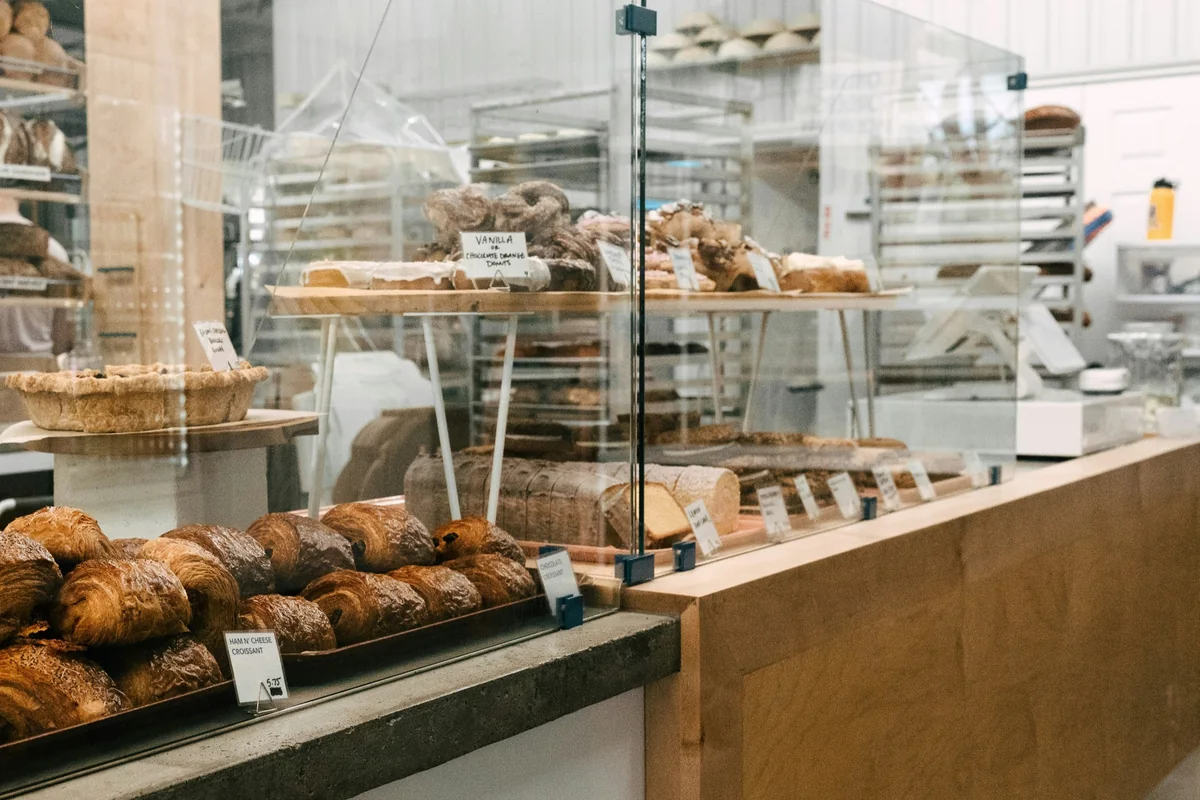
Croissants and loaves on the shelves of a bakery counter, each with a handwritten price tag.
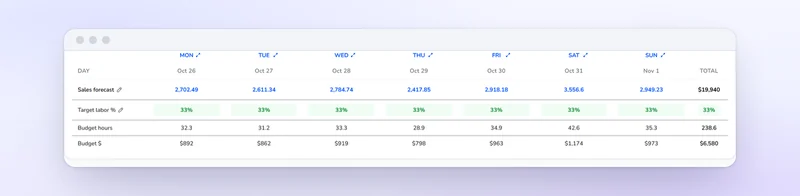
Kronto's labor budget table turning each day's sales forecast into budget hours and dollars.

Free download

Free bakery costing spreadsheet for Excel

Cost per piece with baker time, food cost percentage, a weekly bake and counter labor budget, and a monthly P&L. Every result is a formula you can check and change.

Download the spreadsheetExcel file (.xlsx)

What goes into a bakery costing spreadsheet?

For each item: batch ingredient cost, pieces per batch, baker minutes per batch, packaging and price. From those it works out ingredient, labor and total cost per piece, food cost percentage and gross margin. A good one also budgets weekly bake and counter labor and a monthly profit and loss.

Kronto's free spreadsheet does all three. Download the bakery costing spreadsheet (.xlsx). It opens in Excel and in Google Sheets.

Key takeaways

  1. Cost each item per piece: the batch's ingredients plus baker time, divided by the pieces it yields, plus packaging.
  2. 24 croissants with $14.40 of ingredients and 90 baker minutes at $17.86 an hour cost about $1.82 each.
  3. Toast puts bakery food costs at 30-35% of sales and says food businesses typically keep 3-5% as profit.
  4. Budget bake hours from the production plan and counter hours from when customers come in, at each person's own rate.
  5. Cost from sellable yield, not recipe yield, because trim, misshapes and unsold pieces raise the real cost.
  6. A labor-heavy item like laminated dough can show a low food cost and still earn less once baker time is counted.

How do you calculate the cost of one baked item?

Add the batch's ingredient cost and the baker's time for that batch, divide by the pieces it yields, then add packaging. For example, 24 croissants with $14.40 of ingredients and 90 baker minutes at $17.86 an hour cost about $1.82 each: $0.60 ingredients, $1.12 labor, $0.10 packaging.

The $17.86 rate is the BLS median wage for bakers in May 2025.⁠[1] The croissant numbers are an example; the spreadsheet's Product costing tab runs the same math for up to 15 items.

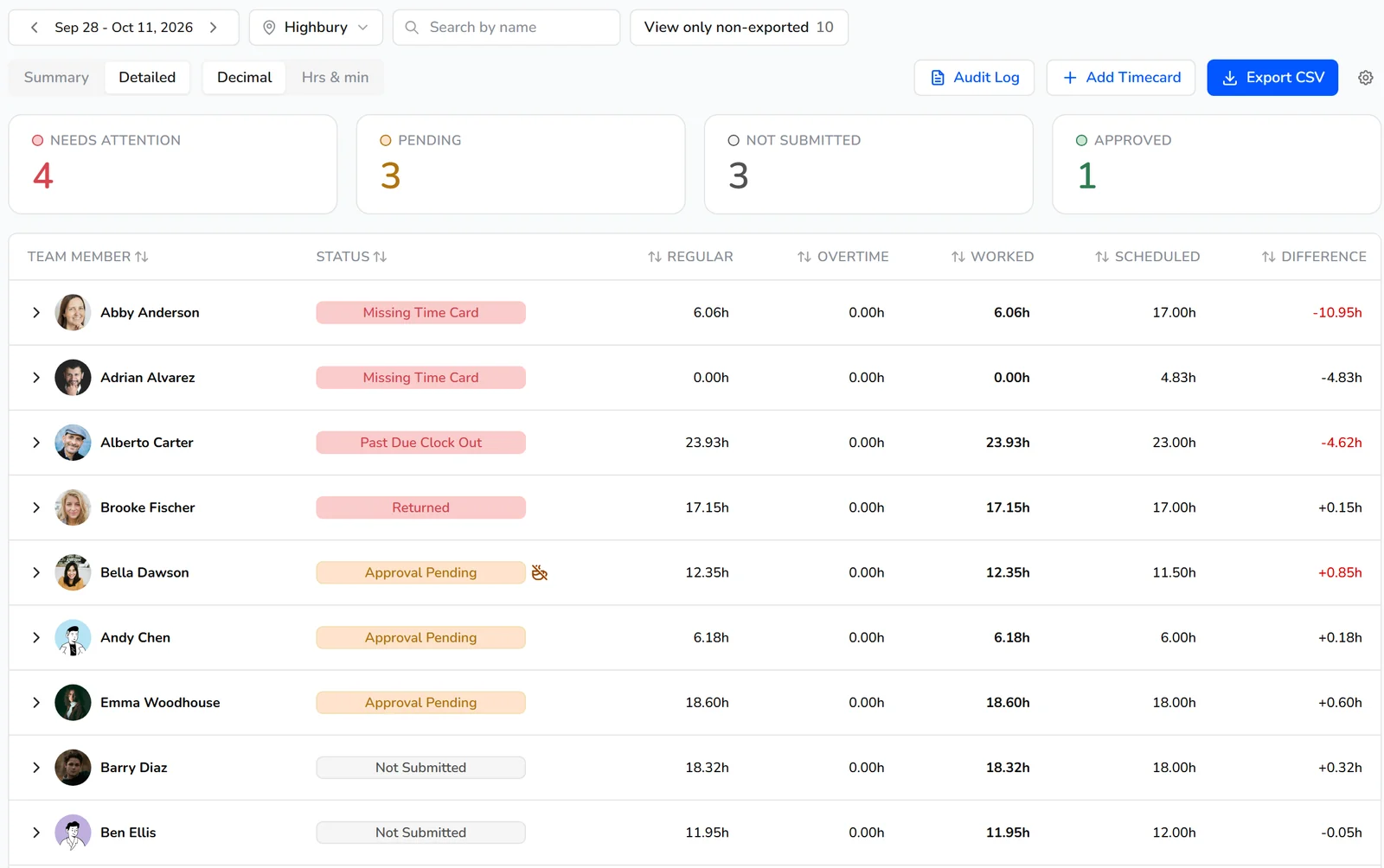
Kronto Time Cards page for a pay period, with summary cards for Needs Attention, Pending, Not Submitted and Approved, and each team member's regular and overtime hours

What food cost percentage should a bakery target?

Toast puts bakery food costs at 30-35% of sales. Per item, divide ingredient cost per piece by the price: a $4.25 croissant with $0.60 of ingredients runs about 14%, and the spreadsheet's example cookie, $0.18 of ingredients on a $2.75 price, under 7%. Items over your target show up red in the spreadsheet.

Toast's bakery cost guide gives the 30-35% range.⁠[2] A low food cost on a labor-heavy item like laminated dough doesn't mean it's your most profitable item. Look at gross margin after baker time too.

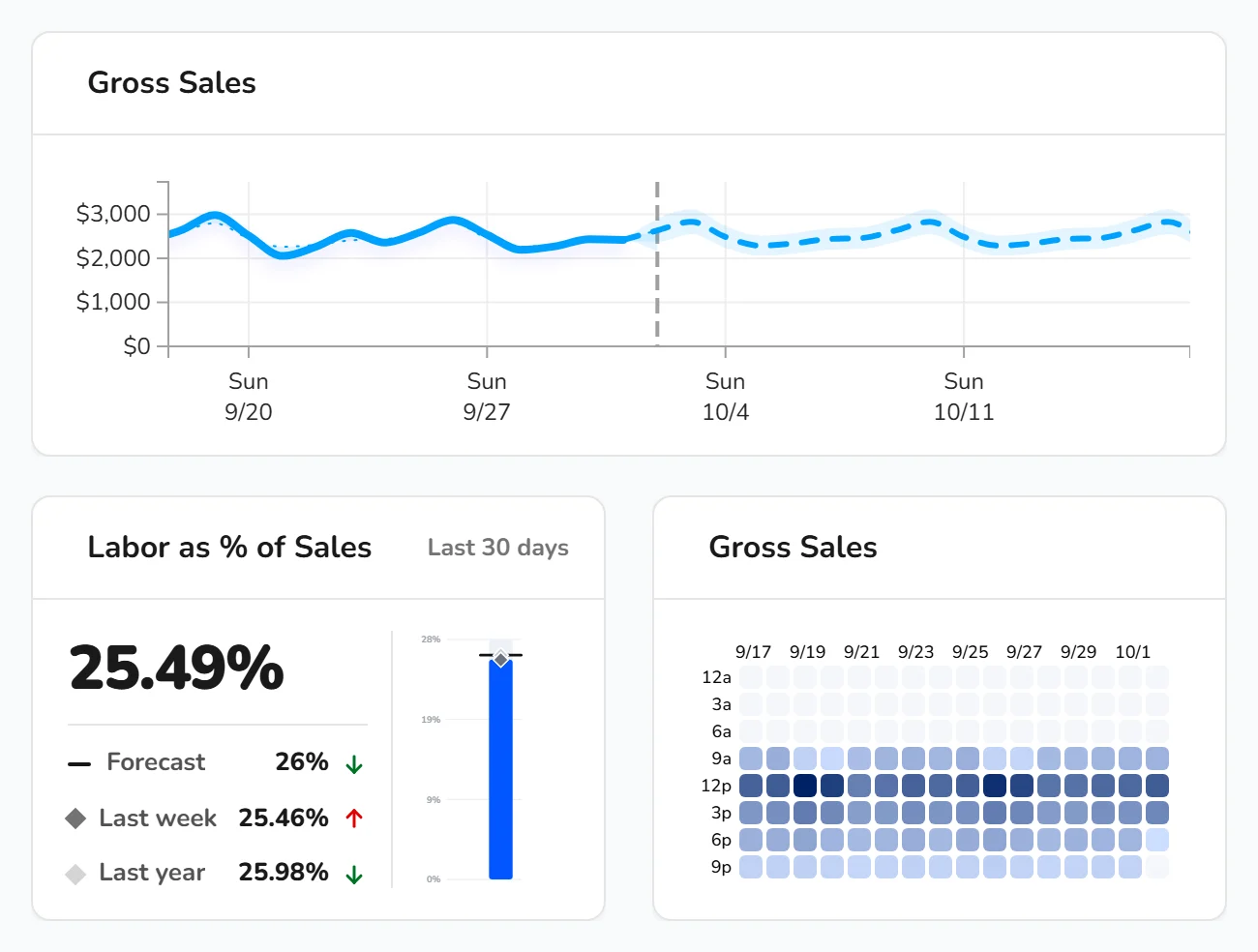
Kronto dashboard comparing a store's daily sales with the forecast, labor as a percent of sales against forecast, last week and last year, and a sales heat map

How do you budget bake hours and counter hours?

Budget them separately: bake hours from your production plan, counter hours from when customers come in. Cost each at the person's own rate, then check the day's total against its labor budget. A slow weekday with a full bake schedule is where labor climbs, so watch bake labor as its own share of sales.

The Weekly labor tab shows bake labor as its own share of sales, so you can see it climb on slow days. Bakers often work early morning, night, weekend or holiday shifts, according to the BLS.⁠[1] For the whole bakery, Toast puts labor at 24-40% of sales.⁠[2]

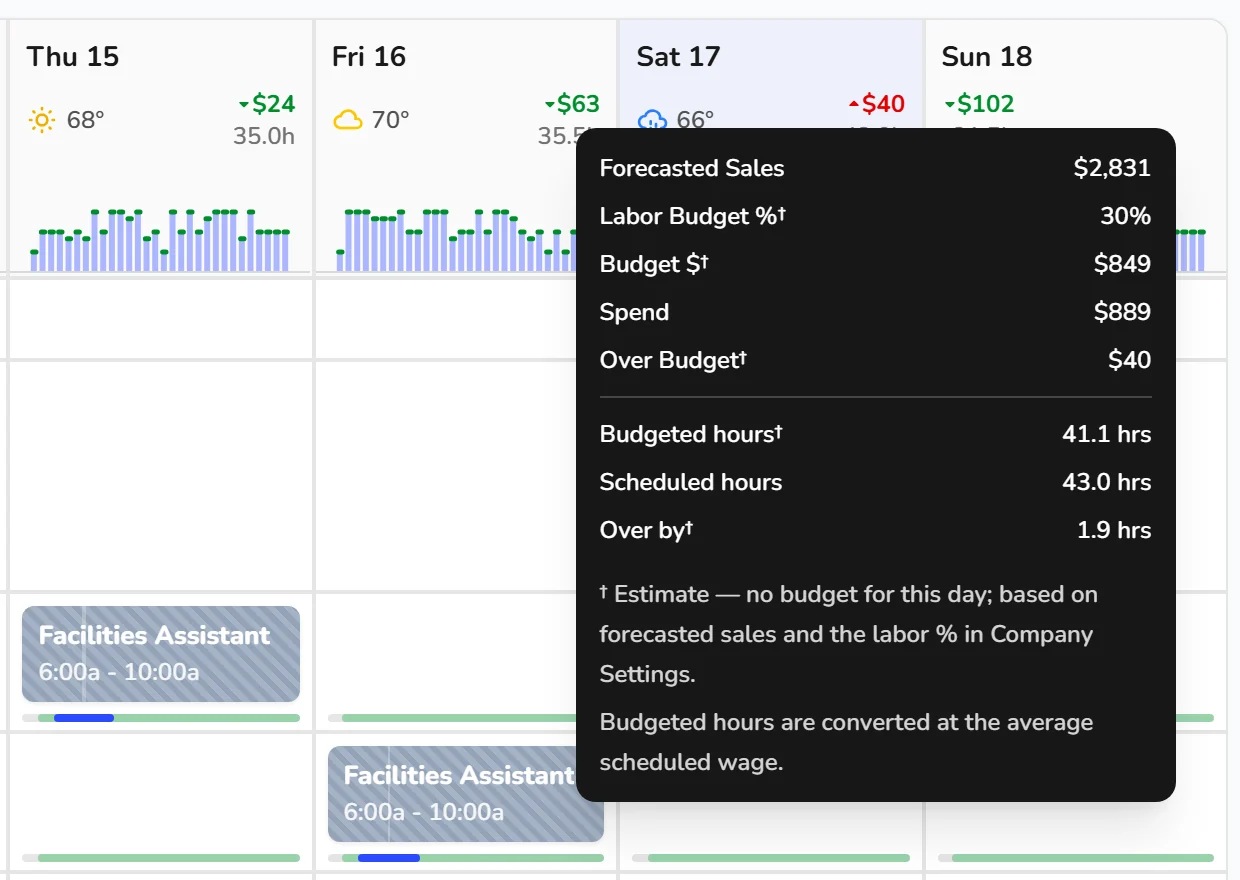
Kronto budget tooltip for a Saturday showing forecasted sales, the labor budget estimated from the company's labor percentage, scheduled spend, the amount over budget, and budgeted versus scheduled hours

How should a bakery price items for profit?

Start from total cost per piece, not ingredients alone. Set a price that keeps food cost near your target and leaves enough margin to cover counter labor, rent and utilities. With food businesses typically keeping 3-5% as profit, according to Toast, a ten-cent pricing mistake on a best-seller is real money.

Toast's bakery guide gives the 3-5% range.⁠[2] Change a price in the spreadsheet and the food cost and margin columns update at once.

What's in the bakery costing spreadsheet

  • Product costing. Ingredient cost, labor and packaging per piece for each item, with food cost percentage and gross margin.
  • Weekly labor. Forecasted sales, bake hours and counter hours by day, with labor budget, scheduled cost, labor % and bake labor as a share of sales.
  • Overtime check. Regular and overtime hours and pay, at time and one-half over 40 hours in a workweek.⁠[3]
  • Monthly P&L. Ingredients, labor, rent, utilities, marketing and other costs as shares of sales, with actuals and profit margin.
  • Sources. Each benchmark default with its link and the date we checked it.

Where the defaults come from

The baker rate defaults to the BLS median of $17.86 an hour;⁠[1] the counter rate defaults to $15.00, the BLS median for fast food and counter workers.⁠[4] Ingredient, labor and marketing defaults are from Toast's bakery cost ranges.⁠[2] Items, batch sizes and prices are examples. Replace them with yours.

Bakery costing mistakes to avoid

  • Leaving baker time out of item cost. Laminated and shaped items carry a lot of labor that ingredient-only costing misses.
  • Costing from recipe yield, not sellable yield. Trim, misshapes and unsold pieces raise the real cost of every item you sell.
  • One labor number for the whole bakery. Bake and counter labor move for different reasons; budget them apart.

Kronto's labor budget shows each day's labor budget and over or under as you build the bake and counter schedule.

Frequently asked questions

How do you work out the gross margin on a bakery item?

Subtract the total cost per piece, ingredients plus baker time plus packaging, from the price, then divide by the price. A $4.25 croissant that costs $1.82 has a gross margin of about 57%. What the bakery keeps after counter labor, rent and every other cost is far smaller: Toast says food businesses typically keep 3-5% as profit.⁠[2]

Is the bakery costing spreadsheet free?

Yes. Download it with no sign-up. It opens in Excel and in Google Sheets.

Can Kronto plan my bake quantities?

No. Kronto forecasts sales from your POS history and budgets labor against it. How much to bake stays with your production plan.

Does the spreadsheet handle more than 15 items?

Copy any row of the Product costing tab down; each row's formulas only refer to that row and the rate cells at the top.

Sources

  1. Occupational Outlook Handbook: Bakers, U.S. Bureau of Labor Statistics. Read October 23, 2026. ↩
  2. How Much Do Bakeries Make? (2025 Data), Toast. Read October 23, 2026. ↩
  3. Overtime Pay, U.S. Department of Labor, Wage and Hour Division. Read October 23, 2026. ↩
  4. Occupational Outlook Handbook: Food and Beverage Serving and Related Workers, U.S. Bureau of Labor Statistics. Read October 23, 2026. ↩

Benchmarks checked against Toast, BLS and DOL sources on Oct 23, 2026. Spreadsheet formulas tested in Excel. Last reviewed November 18, 2026.

Reviewed by Jonan Junwikul, Growth, Kronto, on November 18, 2026.

One app for the whole bakery

Kronto is one app for scheduling, the time clock, tips and payroll, so when you fill in the labor line of your bakery costing spreadsheet, you can work from the bake and counter hours people actually clocked, not an estimate.

Free for up to 10 people