
Bakery Production Planning: How Much to Bake Daily

Bakery production planning made simple: set each day's bake from last week's sales and leftovers on a par sheet, cut waste, and size the bake crew to fit.

Michael Haft smiling, in a light blue button-down shirt

Michael Haft

Author ·

Reviewed by Jonan Junwikul

Growth, Kronto

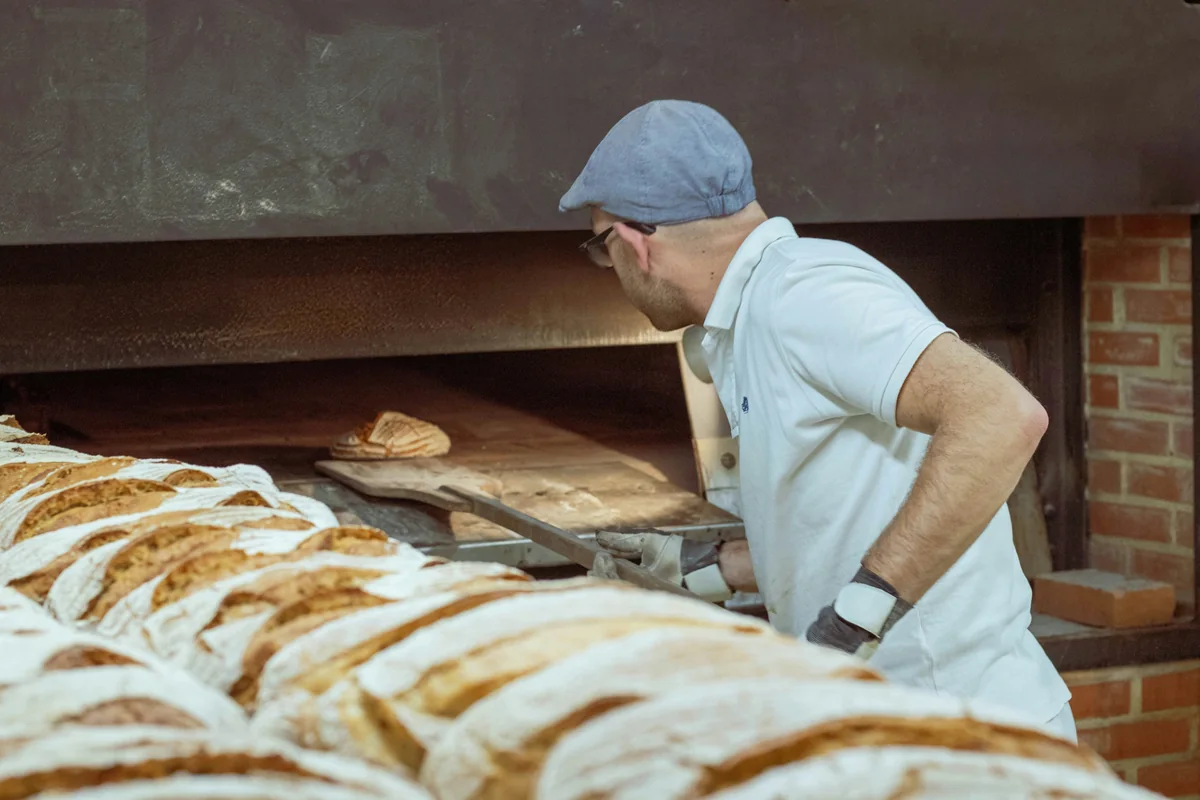
A baker loading loaves into a brick oven, with rows of proofed bread in front of him.
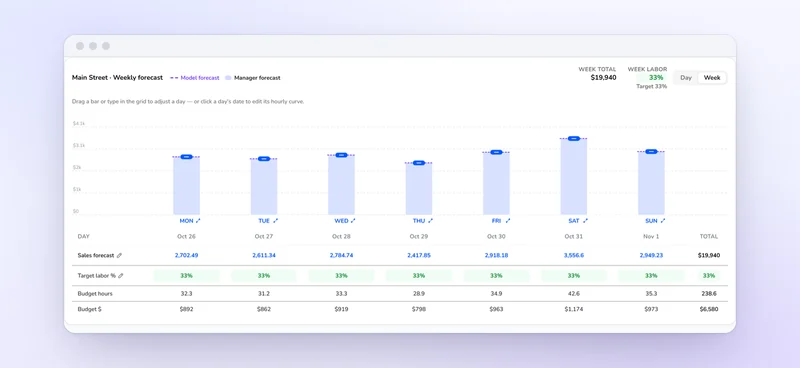
Kronto's weekly sales forecast: the week's total, the labor percent against its target, and each day's forecast bar.

What is bakery production planning?

Bakery production planning is deciding what to bake, how much, and when, for each day. A good plan starts from expected demand by item, adds a small buffer for the items you never want to run out of, and sets the bake shift's start time and crew to match.

Key takeaways

  1. Set a par level per item and weekday: what that weekday sold over the last four weeks, plus a small buffer.
  2. Raise the par when an item sold out early, because sales stop counting demand once the tray is empty.
  3. Lower pars that keep ending in the bin, and bake small second batches of fast sellers instead of one large early batch.
  4. Size the bake crew from the hours the day's pars need, and add a baker on big days rather than lengthening shifts.
  5. Plan bakers and counter staff as separate rosters, since they usually can't cover for each other.
  6. Hours over 40 in a workweek are paid at no less than time and a half under federal law, so spread a holiday bake week across more bakers.

How many pastries should a bakery bake each day?

Bake to a par level per item and weekday: what the same weekday sold over the last four weeks, plus a small buffer. Raise the par when an item sold out early, and lower it when leftovers repeat. Sell-out times matter, because sales stop counting demand once the tray is empty.

How do you plan production from last week's sales?

Export item sales by day from your POS for the last four of the same weekday, with each item's leftovers and sell-out time. Use last week as the newest of the four, not the only one: average them, correct sell-out days upward, trim items that keep ending in the bin, then check the day's total against your sales forecast.

How can a bakery reduce waste?

Plan to demand, not habit. Track leftovers by item and weekday, lower pars that keep ending in the bin, and bake small second batches of fast sellers instead of one large early batch. Bigger days, such as holidays, get their own plan instead of a copy of last week.

How do you size the bake crew from the production plan?

Size the bake crew from the hours the plan needs: add up the mixing, shaping, baking and finishing time for the day's pars, then divide by the hours each baker can work before the doors open. Bigger days get another baker rather than longer shifts, and counter staff are scheduled separately.

A bakery production plan example: a Saturday par sheet

The numbers below are an illustration for a small neighborhood bakery. Columns come from the last four Saturdays in the POS item report and the leftover log.

Example par sheet for Saturday
ItemAverage sold, last 4 SaturdaysSold out?Average leftoverSaturday par
Croissant96Yes, by 10:30 three times0110
Pain au chocolat64Once270
Sourdough loaf38No740
Morning bun41No943

Croissants sold out by 10:30 on three of four Saturdays, so the 96 understates demand and the par goes up to 110 (worked out below). Morning buns ended with nine left from a bake of about 50, so the par comes down to 43, just above the 41 that sold. Sourdough comes down the same way, from about 45 baked to 40. Revisit the sheet weekly.

How do you estimate demand for an item that sold out?

When an item sells out, its sales count stops measuring demand. Estimate the full day by dividing the units sold by the share of that item's sales that normally happen before the sell-out time. Take that share from your POS hourly item report on days the item lasted to close, then set the par a little below the estimate and watch the next week.

In the example, say croissants lasted to close on the fourth Saturday and about 80% of their sales had happened by 10:30 that day (an illustrative share; read yours from the hourly item report). 96 ÷ 0.8 = 120, so demand was about 120 croissants, and 110 is a cautious par that still shows you whether the case empties early.

Scheduling the bake shift

Bakers held about 262,400 jobs in the U.S. in 2025, and their schedules often include early morning, night, weekend or holiday shifts⁠[1]. Because bakers and counter staff usually can't cover for each other, plan them as separate rosters: the bake crew from the production plan, the counter from the hours customers come in.

Watch the week during holiday rushes. Under federal law, hours over 40 in a workweek are paid at no less than time and a half⁠[2]. A big Thanksgiving week is easier on the budget with one extra baker than with three bakers at 50 hours each.

Where Kronto fits

Kronto does not plan recipes or count items; your POS item report and par sheet do that. Kronto forecasts each bakery's sales in dollars from its Square, Toast or Clover history, in half-hour, daily and weekly steps for the next 8 weeks. Bakers can hold a fixed count for the early bake while counter staff scale with forecasted sales, so the forecast you check the par sheet's total against also sets the counter schedule. See sales forecasting in Kronto for the details.

Bake and counter shifts are built in bakery scheduling in Kronto, and the forecast sets the labor budget in Kronto.

Frequently asked questions

What is a par level in a bakery?

The number of each item you plan to have ready for a given weekday. It comes from recent sales of that item on that weekday, plus a small buffer.

How do I know true demand for an item that sells out?

Note the sell-out time, then check your POS hourly item report for a day the item lasted to close: what share of its sales came before that time? Divide the units sold by that share to estimate demand, and set the par a little below it.

Should I bake everything before opening?

Not always. A small second batch of fast sellers mid-morning keeps the case full without baking for the whole day at 4 a.m.

Can I plan production in a spreadsheet?

Yes. One sheet per weekday, with each item's recent sales, sell-out time, leftovers and par, is enough for most single-location bakeries.

What is a bakery production schedule?

A timed plan for the bake: which items go into the mixer, proofer and oven at what time, and who works each step, counted backward from opening. It turns the day's par sheet into start times for the bake crew.

Sources

  1. Bakers (Occupational Outlook Handbook), U.S. Bureau of Labor Statistics. Read October 23, 2026. ↩
  2. Fact Sheet #23: Overtime Pay Requirements of the FLSA, U.S. Department of Labor, Wage and Hour Division. Read October 23, 2026. ↩

Worked examples are illustrations, not benchmarks. Figures checked against the cited BLS and DOL pages on Oct 23, 2026. Last reviewed November 27, 2026.

Reviewed by Jonan Junwikul, Growth, Kronto, on November 27, 2026.

Plan the bake, schedule the crew and run payroll in one app

Your par sheet sets what to bake. Kronto handles the rest of the bakery's week in one app: the sales forecast, the bake and counter schedule, the time clock, tips and payroll.

Free for up to 10 people