

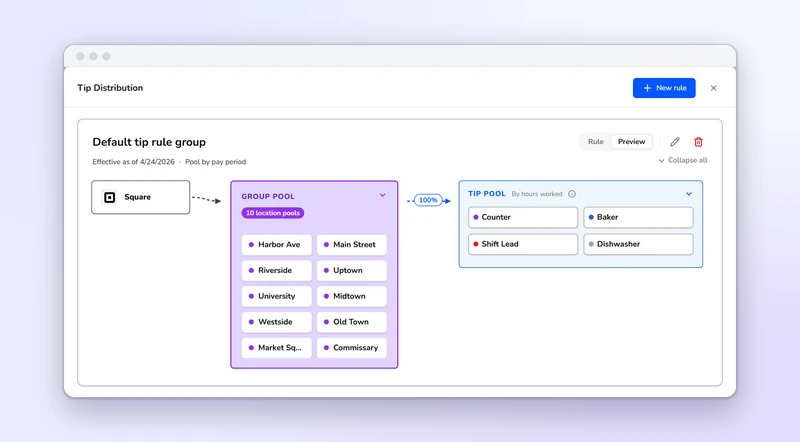
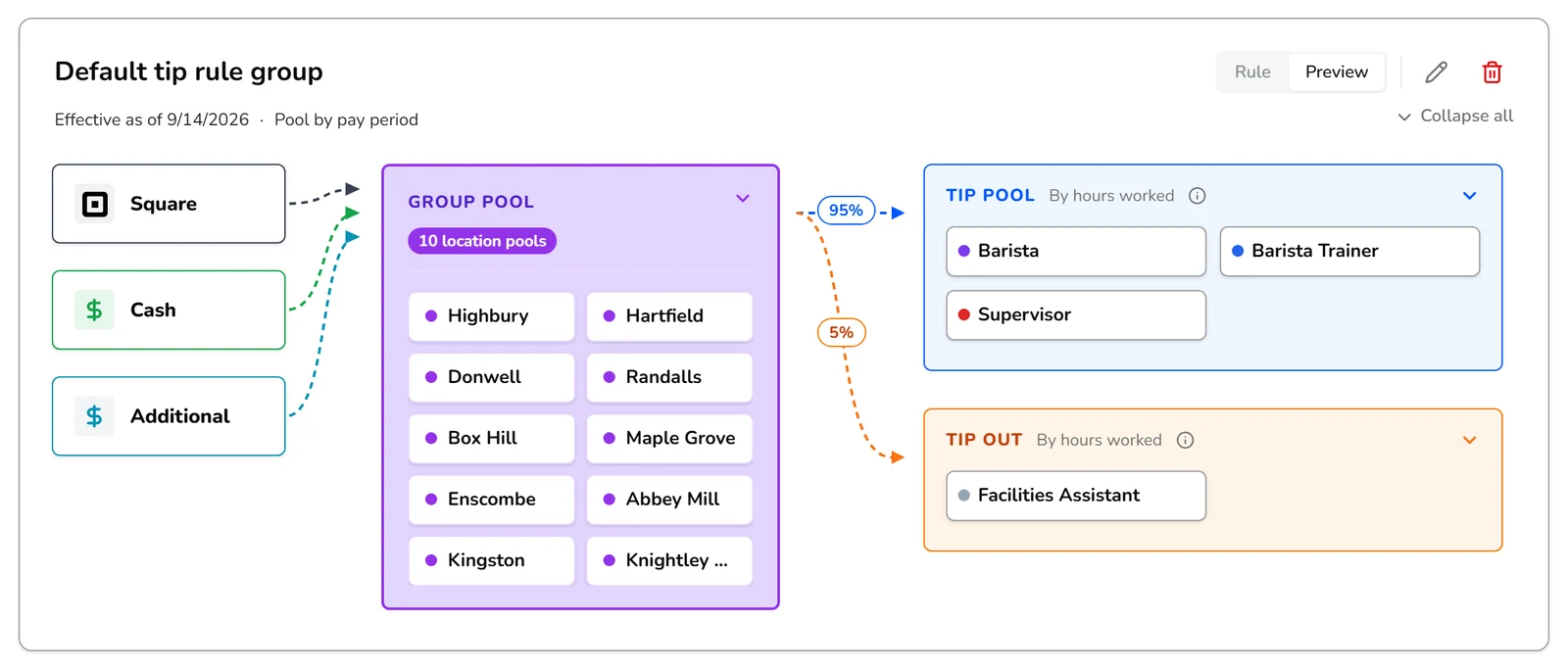

Two ways to set up a bakery tip pool
Here is one week at a small bakery that takes $480 in counter tips. Two counter clerks work 30 and 20 hours; one baker works 40 hours starting at 4 a.m.
| Person | Hours | Counter staff only | Counter staff and baker |
|---|---|---|---|
| Counter clerk A | 30 | $288.00 | $160.00 |
| Counter clerk B | 20 | $192.00 | $106.67 |
| Baker | 40 | $0.00 | $213.33 |
The second setup is only allowed when everyone in the pool, including the clerks, is paid at least the full minimum wage with no tip credit taken. The Department of Labor lets such a pool include employees who aren't customarily tipped, with cooks and dishwashers as its examples[1]. If you take a tip credit for the clerks, the pool must stay with customarily tipped staff, such as counter personnel who serve customers[1].
Run your own week through both setups in the tip pool calculator.
Why bakers' hours change the math
Bakers' shifts often include early mornings, nights, weekends and holidays, and bakers' median pay was $17.86 an hour in May 2025[4]. A full-time baker brings a lot of hours into an hours-based pool: in this example, adding one baker cuts the first clerk's share from $288 to $160, a 44% drop. Talk it through with the team before you change the rule.
A checklist for the bakery tip jar
- Write down who shares. List the roles in the pool and whether you take a tip credit.
- Count at a fixed time. At close, record the total and who counted it.
- Keep managers out. Managers and supervisors may not receive tips from a tip pool[5].
- Card fees only. You may reduce a card tip by the processing fee and no more[1]; California bars even that[6].
- Report tips. Employees who receive $20 or more in tips in a month give you a written report by the 10th of the next month; the IRS counts jar cash, card tips you pay out and tip-pool shares[7].
- Pay by payday. Pool tips are fully distributed by the regular payday[1].
- Keep records. Payroll records for at least three years, time cards for two[8].
Running the bakery tip pool in Kronto
Kronto syncs card tips from Square or Toast, records jar cash from the manager app or the store tablet, splits the pool by the roles and hours you set, and runs payroll with tips and approved hours already in it. See bakery payroll in Kronto.
To keep the pool's hours right, plan bake and counter shifts together in Kronto, so the hours it splits by are the hours you scheduled and approved.
 Jim McKelvey

 Jonan Junwikul